
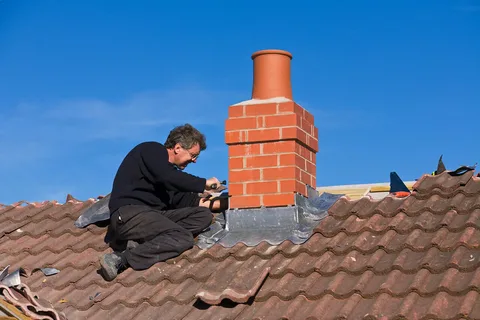
Why chimney repair can’t wait in Kitchener-Waterloo
A chimney is the most exposed piece of masonry on your house. It sits above the roofline and takes wind, rain and snow from every side, with no eaves to shelter it. In Waterloo Region, the long freeze-thaw season makes small problems grow fast.
Catch damage early and the fix is usually a repair, such as new mortar joints, a few new bricks or a sealed crown. Leave it, and water works deeper into the brick each winter until the chimney Repair leans, leaks into the attic or has to come down. This guide covers how to spot trouble, what each repair involves and how to tell a repair job from a rebuild.
Why chimneys break down
Most chimney damage starts with water. Brick and mortar are porous, so they soak up rain and melting snow. When that water freezes, it expands and pushes the material apart from the inside. Each thaw lets more water into the new gaps, and the cycle repeats dozens of times every winter.
The parts of a masonry chimney that fail most often:
- Mortar joints wear out first. Mortar is meant to be softer than brick, and it erodes over decades.
- The crown, the concrete or mortar cap on top, cracks and lets water straight down into the chimney.
- The flashing, the metal seal where the chimney meets the roof, loosens and causes leaks inside the house.
- The bricks themselves spall (flake or pop off at the face) once water gets behind them.
- The flue opening lets in rain, debris and animals when there is no cap.
Water that reaches the inside of the chimney can also damage the flue liner, rust the damper and stain the ceilings and walls around the fireplace.
Warning signs your chimney needs repair
You can spot most chimney problems from the ground with binoculars, or from inside the house. If you see any of these, book an inspection before the next winter.
| What you see | What it usually means | Typical fix |
| Mortar joints recessed, sandy or missing | Mortar has eroded and water is getting in | Repointing |
| Bricks flaking, cracking or popping off at the face (spalling) | Water has frozen inside the brick | Brick replacement |
| White, chalky staining on the brick (efflorescence) | Water is moving through the masonry | Find the water source, then repoint or seal the crown |
| Cracks in the concrete cap on top | Crown has failed | Crown repair or replacement |
| Water stains on the ceiling or wall near the chimney | Flashing or crown leak | Flashing repair, crown repair |
| Chimney leaning or pulling away from the house | Structural failure | Partial or full rebuild |
| Brick pieces on the roof or in the gutters | Advanced spalling | Brick replacement or rebuild |
| Rust on the damper or firebox, damp smell from the fireplace | Water entering from the top | Chimney cap, crown repair |
| Birds, squirrels or debris in the flue | Open flue | Chimney cap |
A leaning chimney is the one sign that should not wait. Keep people away from the area below it and call a mason right away.
Chimney repair options explained
Most chimneys need one or two targeted repairs, not a full rebuild. These are the six services that cover nearly every problem.
Repointing (tuckpointing)
The mason grinds out worn mortar to a consistent depth and packs in fresh mortar matched to the brick. Repointing seals the joints against water and is the most common chimney repair. Done early, it stops the damage that leads to spalling.
Brick replacement
Cracked or spalled bricks are cut out and replaced with matching brick. The new mortar joints around them are tooled to match the rest of the chimney, so the repair blends in.
Chimney crown repair and replacement
Hairline cracks in a sound crown can be sealed. A crown that is badly cracked, crumbling or poorly built is broken off and replaced with a new one that sheds water past the face of the brick.
Chimney flashing repair
Flashing is the metal seal between the chimney and the roof. Repairs reset or replace it so water runs off the roof instead of into the attic. If you have a leak near the chimney, flashing is often the cause.
Chimney caps
A cap covers the flue opening. It keeps out rain, snow, animals and debris, and it is one of the cheapest ways to protect the inside of the chimney.
Full chimney rebuild
When the damage runs too deep, the chimney foundation repair is taken down to solid masonry and rebuilt from there. A rebuild is the answer for leaning chimneys, widespread spalling or brickwork that has lost its strength. Only the damaged section is rebuilt, often just the part above the roofline.
Repair or rebuild: how to tell the difference
If the brick itself is still solid, a repair is almost always enough. A rebuild is only needed when the structure has failed.
| Repair is usually enough when… | A rebuild is usually needed when… |
| The mortar is worn but the bricks are sound | The chimney leans or has pulled away from the house |
| Only a few bricks are spalled | Spalling covers large areas of the stack |
| The crown has cracks but the brick below is dry and solid | Bricks are loose and shift when you push on them |
| The leak traces back to the flashing | Earlier patch jobs keep failing year after year |
| The chimney stands straight and plumb | Water has broken down the masonry from the inside |
An honest mason will tell you when a repair is enough. Be careful with any quote that jumps straight to a full rebuild without showing you why the brick can’t be saved.
Chimney repair on older Kitchener-Waterloo homes
Older chimneys need mortar and brick that match what is already there. Many older homes in Kitchener and Waterloo were built with softer brick and lime-based mortar. Modern mortar is often harder than that brick.
When mortar is harder than the brick around it, the brick takes the stress of freezing and movement, and it cracks or spalls first. That is why the mortar for a heritage chimney should be matched in strength, colour and texture, not just poured from the nearest bag. Matched mortar lets the chimney age the way it was built to, and keeps the repair from standing out against the original brickwork.
What to expect from a chimney repair
Old Fashioned Masonry follows the same five steps on every chimney job, from first call to final check.
- Reach out. Call or email to describe what you’re seeing.
- Top-to-bottom inspection. The chimney is checked from the crown and flue down to the flashing and the base.
- Written estimate. You get a free, written quote that explains what needs fixing and what can wait.
- Repair work. The work is done with matched brick and mortar, and the roof and landscaping are protected.
- Final walkthrough. You walk through the finished work together before the job is closed out, and the site is left clean.
Chimney repair FAQ
How do I know if my chimney needs repair?
Look for crumbling or missing mortar, flaking bricks, cracks in the crown, white staining on the brick, or water stains near the chimney inside the house. A chimney that leans needs attention right away.
What is the best time of year for chimney repair in Ontario?
Late spring through fall. Mortar needs to cure above freezing, so masonry work is planned for the warmer months. Booking before winter also stops another freeze-thaw season from making the damage worse.
Can a leaking chimney be fixed without rebuilding it?
Usually, yes. Most leaks come from failed flashing, a cracked crown or open mortar joints, and each of these can be repaired on its own.
What’s the difference between repointing and tuckpointing?
Both replace worn mortar joints. Repointing is the general term. Tuckpointing traditionally adds a contrasting finish line to the new joint, though many people use the two words for the same job.
Do I need a chimney cap?
If your flue is open, a cap is worth it. It keeps rain, snow, debris and animals out of the chimney and protects the flue and damper.
Do you serve areas outside Kitchener and Waterloo?
Yes. Old Fashioned Masonry works in Kitchener, Waterloo and the surrounding area, including Cambridge and Brantford.
Don’t wait for the next winter
Every freeze-thaw cycle turns a small chimney repair into a bigger one. If you’ve noticed crumbling mortar, a cracked crown or a leak near the chimney, now is the time to have it checked.
Old Fashioned Masonry gives honest assessments, matches brick and mortar to your home, and provides a free written estimate. Call 519-496-9334 or visit the chimney repair page to book your inspection in Kitchener, Waterloo, Cambridge or Brantford.